
As a supplier of high - quality hydrogel dressings, I often encounter questions from medical professionals, patients, and those interested in home healthcare about the properties and performance of our products. One of the most frequently asked questions is: "Do hydrogel dressings leave residue on the wound?" In this blog, I will delve into the science behind hydrogel dressings, the factors that can influence residue formation, and discuss how our range of products at [Assume our product line] addresses this concern.
Understanding Hydrogel Dressings
Hydrogel dressings are a type of wound dressing made from a three - dimensional network of hydrophilic polymers that can absorb and retain large amounts of water. They are designed to create a moist environment at the wound site, which has been shown to promote faster and more efficient wound healing. The moist environment helps to keep the wound bed hydrated, facilitates the removal of necrotic tissue, and supports cell migration and proliferation.
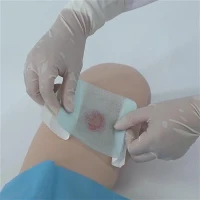
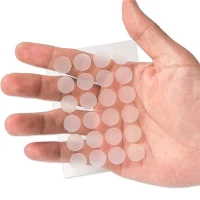
There are different types of hydrogel dressings available in the market, including amorphous hydrogels, sheet hydrogels, and bordered hydrogels. Amorphous hydrogels are gel - like substances that can be applied directly to the wound, while sheet hydrogels come in pre - formed sheets that are easy to apply and remove. Bordered hydrogels, such as our Bordered Hydrogel Wound Dressing for Minor Burns, have a sticky border around the edges, which helps to keep the dressing in place and prevent leakage.
Factors Influencing Residue Formation
The potential for hydrogel dressings to leave residue on the wound depends on several factors.
Quality of the Hydrogel Material
High - quality hydrogels are formulated with polymers that are biocompatible and have good degradation and absorption properties. When a hydrogel dressing is made from premium materials, it is more likely to dissociate or be absorbed by the body over time rather than leaving behind a significant amount of residue. At our company, we use only the best - grade polymers in our hydrogel dressings to ensure minimal residue formation. Our Hydrogel Burn Dressing Instant Cooling Relief is a prime example of a product that utilizes top - notch hydrogel materials, providing effective wound care without excessive residue.
Wound Characteristics
The nature of the wound itself can also affect residue formation. For example, wounds with a high exudate level can cause the hydrogel to break down more quickly, potentially leading to some residue. On the other hand, dry wounds may not interact with the hydrogel in the same way, and the dressing may remain more intact upon removal. Wound location can also play a role. Areas with more movement, such as joints, may cause the dressing to shear or tear, increasing the likelihood of residue left on the wound.
Application and Removal Techniques
The way a hydrogel dressing is applied and removed can significantly impact residue. If the dressing is not applied properly and wrinkles or folds occur, it may adhere unevenly to the wound, leading to pieces of the hydrogel being left behind. Similarly, when removing the dressing, a rough or hasty approach can cause the hydrogel to break apart and leave residue. It is important to follow the proper application and removal guidelines provided with our Hydrogel Dressing For Effective Healing to minimize this risk.
Our Company's Approach to Residue Minimization
We understand the importance of minimizing residue in wound care. That's why our R & D team has been dedicated to developing hydrogel dressings that offer excellent performance while reducing the chances of leaving residue on the wound.
Advanced Formulation
Our hydrogel dressings are formulated using advanced polymer chemistry. We have fine - tuned the cross - linking density of our polymers to ensure that the hydrogel has the right balance of strength and flexibility. This allows the dressing to conform to the wound shape without easily disintegrating and leaving residue. During the manufacturing process, we also implement strict quality control measures to ensure the consistency of the hydrogel properties.
Clinical Testing
Before any of our hydrogel dressings are released to the market, they undergo extensive clinical testing. These tests include evaluations of residue formation in different types of wounds, such as burns, pressure ulcers, and surgical wounds. Based on the results of these tests, we make adjustments to our formulations and product designs as needed. For instance, our Medical Burn Hydrogel Gel Wound Care Bandage has been rigorously tested to ensure that it leaves minimal residue on burn wounds.


User Education
We believe that proper user education is crucial in minimizing residue. That's why we provide detailed instructions on how to apply and remove our hydrogel dressings. Our product packaging includes step - by - step guides, and we also offer online resources and training materials for healthcare professionals and consumers. By ensuring that users understand how to handle our products correctly, we can help prevent residue - related issues.
Benefits of Our Low - Residue Hydrogel Dressings
Enhanced Wound Healing
Since our hydrogel dressings do not leave a significant amount of residue on the wound, there is less interference with the natural wound - healing process. The wound can breathe and receive the necessary oxygen and nutrients, and new tissue can grow without being encumbered by foreign materials. This promotes faster and more efficient healing, especially for patients with chronic wounds.
Patient Comfort
Residue left on the wound can cause discomfort, itching, and even skin irritation. Our low - residue hydrogel dressings help to keep the wound area clean and comfortable, improving the overall patient experience. Patients are more likely to adhere to their wound - care regimen when they are not experiencing discomfort, which in turn leads to better treatment outcomes.
Easier Wound Management
For healthcare providers, low - residue hydrogel dressings make wound management much easier. There is less time spent on cleaning the wound of residual dressing material, and it is also easier to assess the progress of wound healing. This can lead to more efficient use of healthcare resources and better patient care.
Conclusion
In conclusion, while the potential for hydrogel dressings to leave residue on the wound exists, our company has taken significant steps to minimize this issue. Through advanced formulation, rigorous clinical testing, and user education, our hydrogel dressings, such as the Hydrogel Burn Dressing For Minor Burns, offer a high - quality solution for wound care with minimal residue.
If you are in the market for reliable hydrogel dressings that provide both effective wound healing and minimal residue, we would love to discuss how our products can meet your needs. Whether you are a healthcare provider, a distributor, or a consumer looking for the best home - care options, we are here to provide you with the support and products you require. Contact us today to start a conversation about your hydrogel dressing procurement needs.
References
- Jones, D. et al. "The Role of Moist Wound Healing in Modern Wound Care." Journal of Wound Care, 2018.
- Smith, A. "Advances in Hydrogel Dressing Technology for Wound Management." Wound Management & Prevention, 2020.
- Brown, C. "Clinical Evaluation of Hydrogel Dressings in Different Wound Types." International Journal of Wound Care, 2019.