


How to take care of blisters on our feet?
1. Change shoes
If the blister is caused by ill-fitting shoes or too hard materials, you should immediately change to soft, loose, and breathable shoes. New shoes may require a period of adaptation, and you can use insoles or heel stickers to reduce friction.
2. Keep your skin clean
Gently wash the blister area with warm water and mild soap or non-irritating detergent. Avoid using overheated water or strong detergents to avoid irritating the skin. After washing, gently dry with a clean towel to ensure that the blister area is dry to prevent bacterial growth.
3. Local disinfection
You can use povidone iodine solution to gently wipe the blister area and the surrounding skin for disinfection, which will help reduce the risk of infection. After disinfection, you can gently cover the blister area with sterile gauze to protect the wound.
4. Cold compress
Cold compress can reduce swelling and pain. Wrap an ice pack or cold towel in a plastic bag and gently apply it to the blister area for 15-20 minutes each time. Be careful to avoid direct contact with the skin to prevent frostbite.
5. Apply medication
If the blister area shows signs of redness, swelling, pain or infection, you can follow the doctor's advice to use medications to control the infection.
At the same time, patients should also closely observe changes in the blister area. If infection, increased pain or persistent non-healing occurs, they should go to the hospital immediately for treatment.
How to prevent blisters from friction on new shoes
There are several ways to prevent blisters from friction with new shoes.
1. Expand the shoes: New shoes are one of the main causes of blisters, especially when wearing new shoes barefoot. You can use a hair dryer to slightly heat the shoe body to soften the material, or wear thick socks and walk in the shoes to help expand the shoes. This applies to flat shoes and shallow
2. Choose the right socks: Some socks have seams on the toes or heels, which will rub your feet and cause blisters. It is recommended to change to a pair of socks without seams or seams on the instep.
3. Use moisturizing products: Applying soft products such as vaseline and foot cream to the parts that are prone to rubbing your feet can reduce the discomfort caused by friction.
4. Adjust the material of the shoes: Use a wet towel to clamp the place where the feet are rubbed, and then use a shoe stretcher to stretch the upper, or put newspapers in the shoes after soaking them in water and leave them overnight to make the shoes more comfortable.
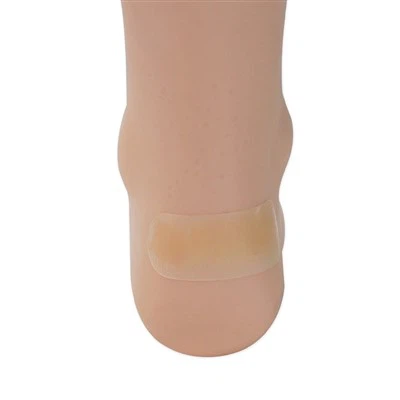
5. Use anti-friction stickers: Apply anti-friction stickers or Band-Aids to the places where the feet are rubbed, which can effectively prevent rubbing and blisters.
6. Gradually adapt to new shoes: New shoes need time to adapt to the shape of your feet. Wear new shoes for short walks at first, and gradually increase the walking time until your feet are fully adapted to the shoes.
7. Keep your feet dry: Wet skin and shoes or socks can easily cause friction and lead to blisters. You can sprinkle some talcum powder or corn starch in your shoes or on your feet to absorb excess moisture and ensure that your feet are dry and free of blisters.
About the blister bandage, generally we provide both PU film and hydrocolloid material bandages.You can choose the one you need.
General Information
Hydrocolloid heel patch can protect local wounds, promote wound healing, and can also be anti-inflammatory, moisturizing, and can also seal wounds.
1. Protect local wounds: Hydrocolloid dressings are composed of elastic viscous substances and colloids, among which methyl carbide sodium cellulose is a common absorbable component. After use, it can protect the wound.
2. Promote wound healing: It can also speed up the recovery of the wound and needs to be used in cooperation with doctors.
3. Anti-inflammatory: After using this dressing, it can prevent external pathogens from invading the wound and has a certain anti-inflammatory effect.
4. Moisturizing: Hydrocolloid dressings have weak water absorption capacity and mainly play a moisturizing role. They are often used in wounds that have formed granulation tissue and need epithelial crawling. They can keep the local wound moist and promote wound healing. When using hydrocolloid dressings, it is necessary to debride and disinfect the local wound and wait for the wound to dry before applying.
5. Closing wounds: Since hydrocolloid dressings have limited water absorption capacity, they can temporarily close wounds. They can also be used for non-infected gangrenous wounds to create an overly humid environment for autolytic debridement.
Precautions
Hydrocolloid heel patches are only used for wounds with less exudation, so they are suitable for superficial, medium-depth wounds, and wounds with small to medium exudation. They are not recommended for deeper wounds. When tearing off hydrocolloid dressings, you should be gentle and avoid violent pulling to avoid damaging the local skin, which is not conducive to the recovery of local wounds.
Certificates:FDA CE
Hot Tags: Hydrocolloid Blister Bandages For Feet Toe, China Hydrocolloid Blister Bandages For Feet Toe manufacturers, suppliers, factory, Hydrocolloid dressing with foam backing, Hydrocolloid wound dressing with foam, Hydrocolloid foam dressing, Hydrocolloid bandage, Hydrocolloid dressing foam